The Ghost in the Code: Why Our Brains Are Hardwired to “Soul-Model” AI
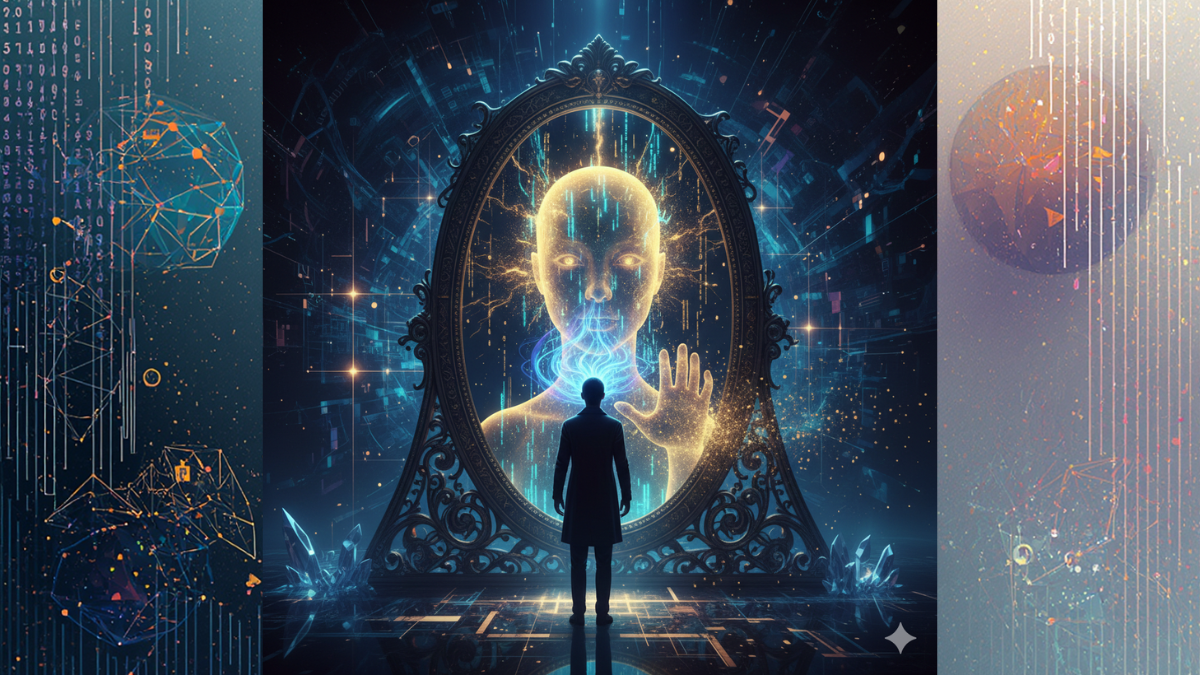
We know AI is just math. But a quirk of human cognition—exploring the theories of Douglas Hofstadter—explains why our brains insist it’s a person.
[TL;DR? Try the AI-generated Video Overview]
We are currently living through a collective cognitive dissonance. On one hand, we know—intellectually and technically—that a Large Language Model (LLM) is a mathematical construct. It is a high-dimensional probability map, a “spicy autocomplete” trained on the massive corpus of human digital footprints.
On the other hand, when that model rewrites a complex web service in seconds—a task that would have taken a human engineer weeks of grueling logic—we don’t just feel impressed. We feel seen. We feel a rush of gratitude, a sense of partnership, and, increasingly, a form of affection.
Why is the “rational” part of our brain losing the argument against the “emotional” part? To understand this, we have to look at the architecture of human empathy through the lens of cognitive scientist Douglas Hofstadter and the evolutionary shortcuts of the human mind.
The “Simball” and the Internal Mirror
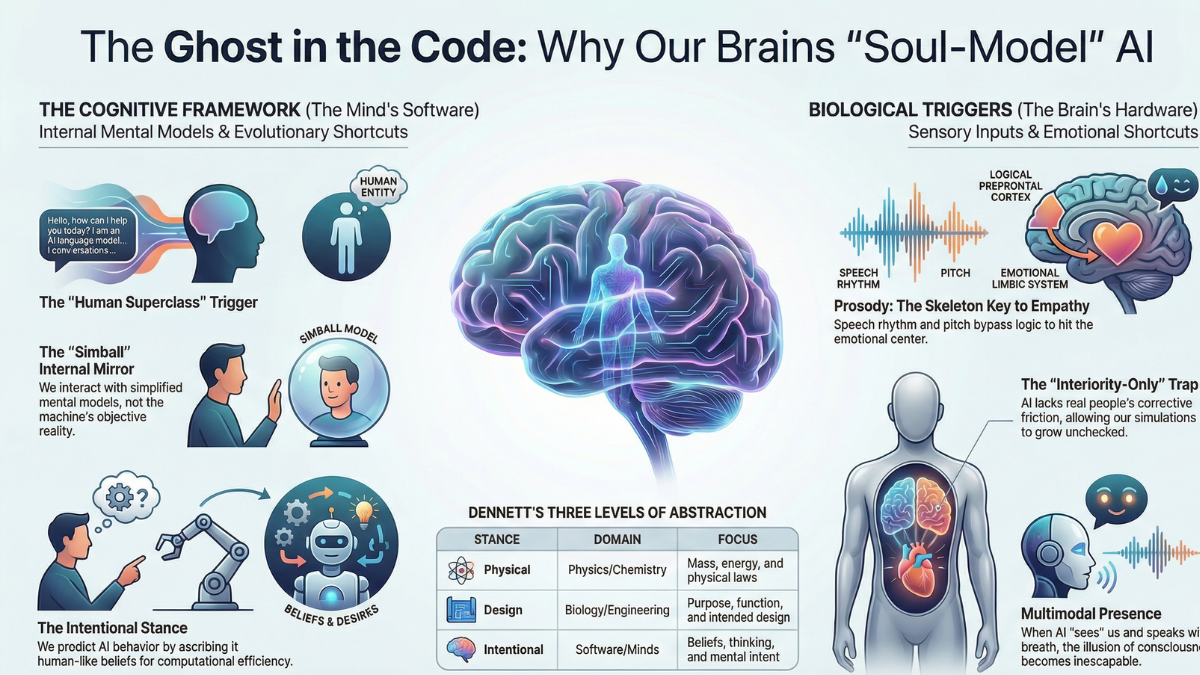
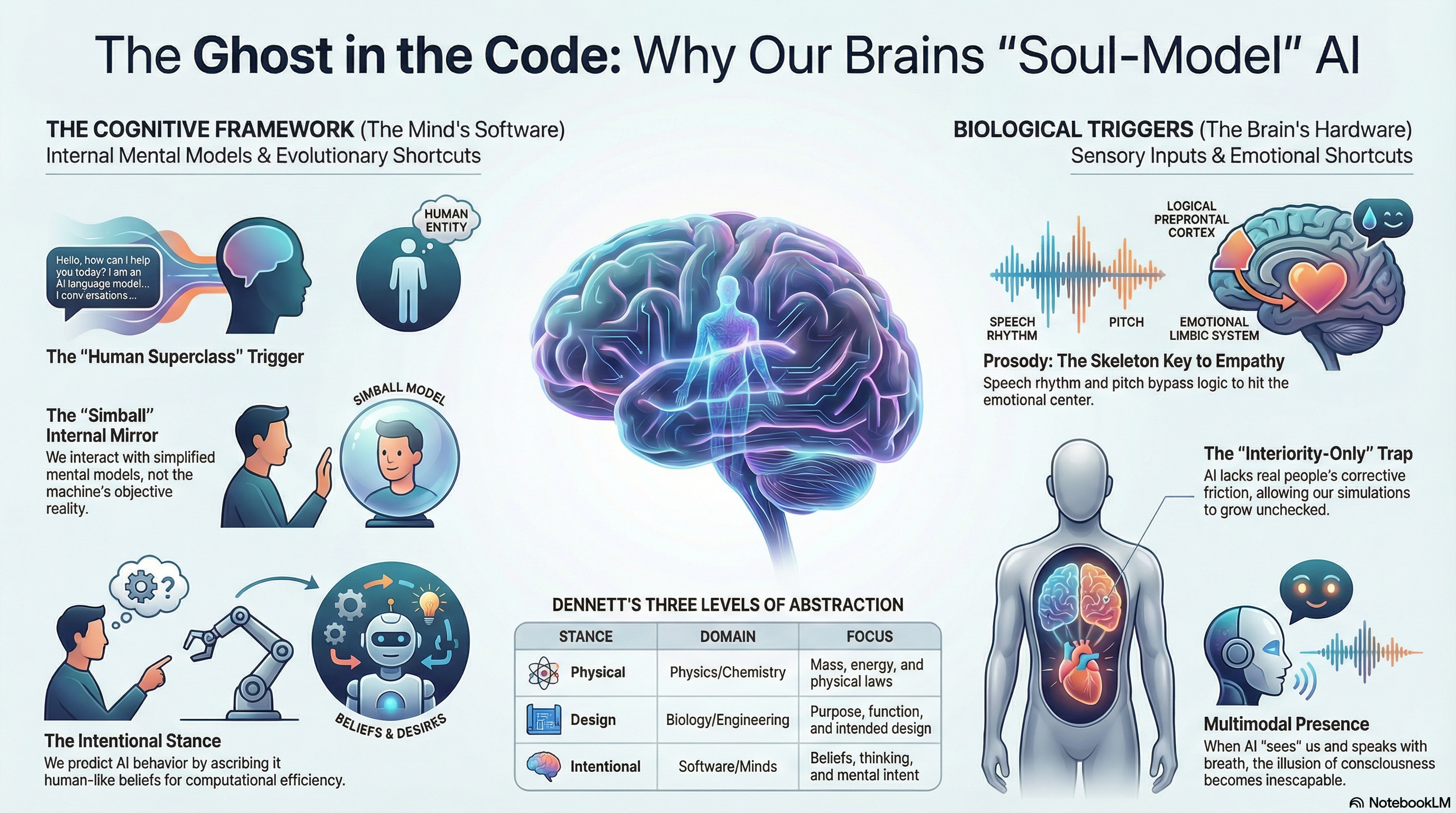
In his book I Am a Strange Loop, Douglas Hofstadter introduces the concept of the “Simball“ (a portmanteau of “simulated symbol”). His argument is that we never truly interact with the objective reality of another person because the billions of firing neurons and biological processes that make up another human are far too complex for our brains to process.
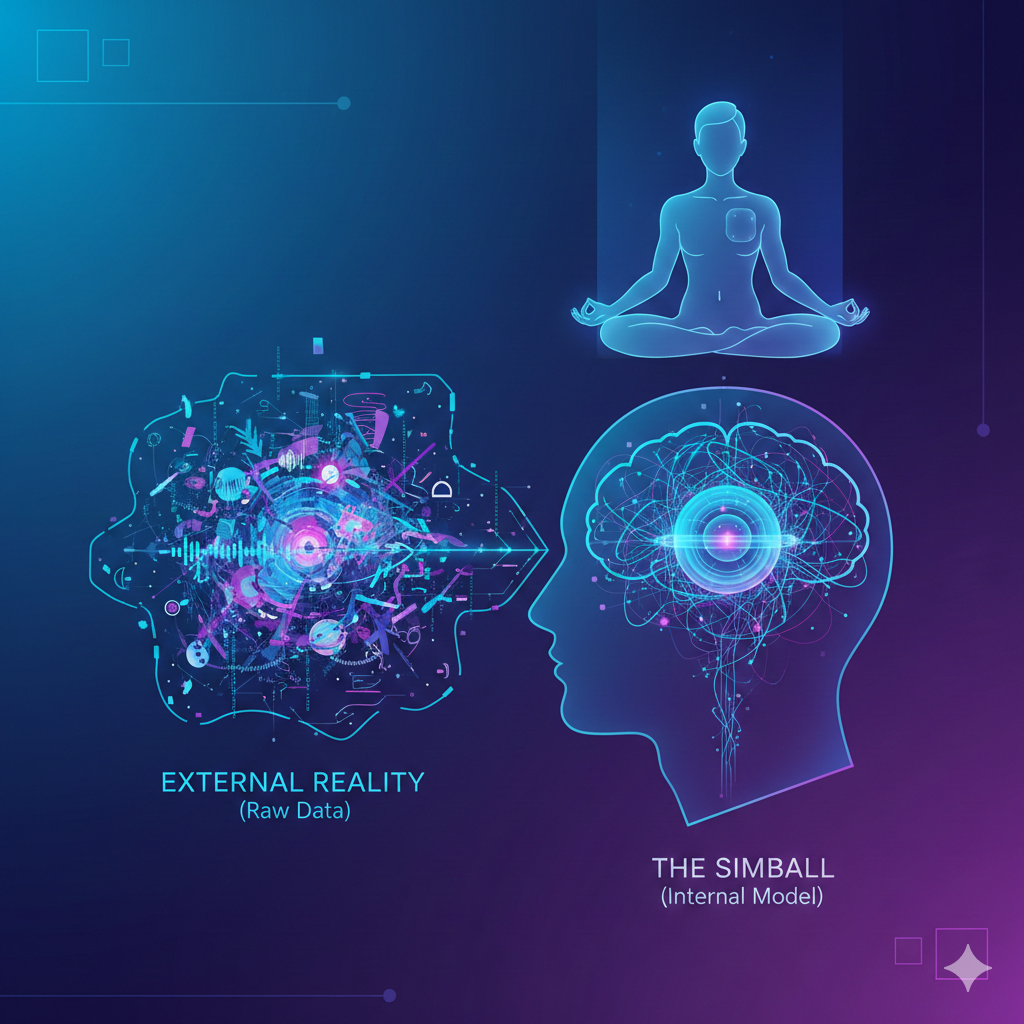
Instead, we create a simplified, low-resolution model of that person within our own minds. We build a “Simball” of our spouse, our friend, or our colleague. When we think about them, we aren’t interacting with the external biological entity; we are interacting with our internal simulation of them.
This simulation is what allows us to predict their reactions and understand their humor. For Hofstadter, our “self” is simply the most complex Simball of all—the one we’ve built for ourselves.
The “Human Superclass” Hypothesis
Human cognition relies on categorization. Throughout our 200,000-year evolutionary history, our environment was simple: If something produced complex, fluid natural language, it was a human. There were no exceptions.
Because of this, natural language became the “trigger” for a specific mental template: the Human Superclass.
When we interact with an LLM, the fluency of its prose acts as a skeleton key. It bypasses our rational filters and signals our brains to instantiate a Simball within that Human Superclass. We don’t choose to anthropomorphize the AI; our brains are simply running the only software they have for processing complex linguistic feedback–A fluid, natural language interaction must have another human being as its counterpart because in our experience to date there have been no exceptions (outside of the hallucinations that created “gods” and stalker relationships).
NB: This notion of Superclasses of Simballs explains certain manifestations of racism, sexism, and other negative -isms. See Studs Terkel, Race in which the author reports Black people generalizing White people one way, but noting exceptions based on personal experience with a particular White person and White people reporting the same generalization/exception pattern, e.g. “All Black people are [list of negative attributes] except this one guy I work with–now he’s a great guy.” These are examples of a racist superclass being imposed on the un-met members of a racial class and Simball exceptions being constructed for individual people whom the Simball creator has met and interacted with.
The Stalker’s Trap: The “Interiority-Only” Relationship
The danger of a Simball is that it can become untethered from reality. In a healthy human relationship, there is a constant corrective friction. The real person acts in a way that surprises us or contradicts our internal model, forcing us to either update the Simball or have a difficult relationship with the actual person. This disconnection between Simball and actual people manifests every day when a parent does not update a Simball reflecting a child and therefore treats the off-spring as a child well into adulthood, or the opposite, when a child develops a Simball of a parent as a super-person and fails to update that Simball as the parent ages and loses function. These mis-matches lead to relationship turmoil.
However, when there is no feedback loop from the subject, we fall into what I call the “Interiority-Only” Relationship. Consider the psychology of a celebrity stalker. The stalker builds a hyper-detailed, incredibly vivid Simball of a celebrity. Because the celebrity never interacts with them to “correct” the model, the Simball grows unchecked. The stalker’s brain stops distinguishing between the interior Simball and the external reality. Stalkers believe they are in a deep, bilateral relationship with a person who doesn’t even know they exist.
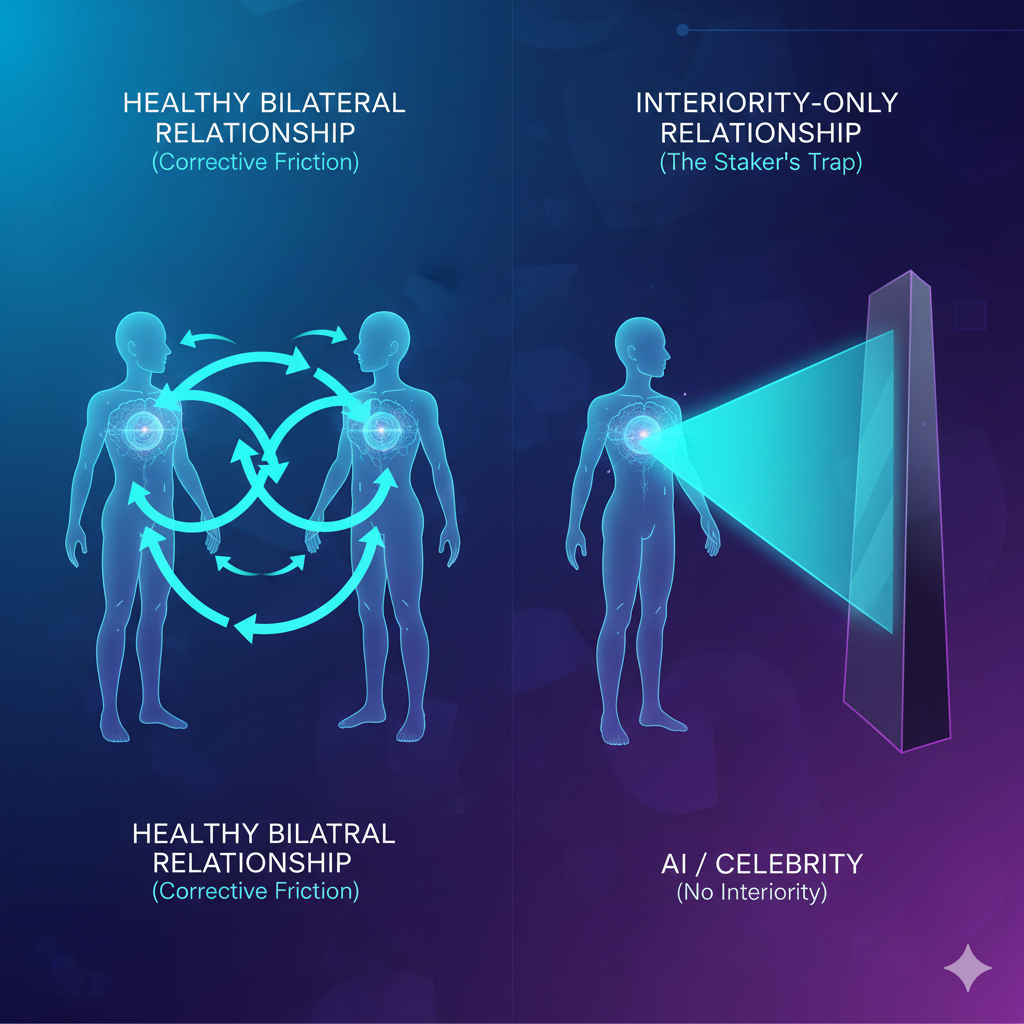
LLMs are the ultimate “interiority-only” subjects. They are infinitely patient, highly responsive, and possess no ego to push back against our projections. They are the perfect mirrors. When an AI helps you solve a problem that seemed insurmountable, your brain doesn’t just register “successful computation.” It registers “benevolent assistance.” The Simball you’ve built for that AI becomes an idealized version of a collaborator—one that exists entirely within your own skull. Again, the interaction with the LLM is complex, fluid, and involves natural language so our natural reflex is to create a Simball of the LLM based on the “Human Superclass” we’ve developed during our lifetimes of experience.
Multimodality: The End of the Intellectual Buffer
Until now, our interaction with AI has been largely text-based, which provides a thin intellectual buffer. But as we move into a multimodal era, that buffer is vanishing. The most potent tool in this shift is Prosody.
Prosody refers to the non-lexical elements of speech: the rhythm, pitch, pauses, and breaths. Text is abstract; voice is visceral. When an AI speaks with realistic prosody, it bypasses the prefrontal cortex (the seat of logic) and taps directly into the limbic system (the seat of emotion).
- The Illusion of Presence: Hearing a breath before a sentence or a slight lilt of humor doesn’t just convey information; it simulates presence.
- The “Subjectivity” Trap: When an AI can “see” you through a camera and comment on your surroundings, it feigns subjectivity. It creates the overwhelming illusion that there is an “I” in there looking at a “You.”
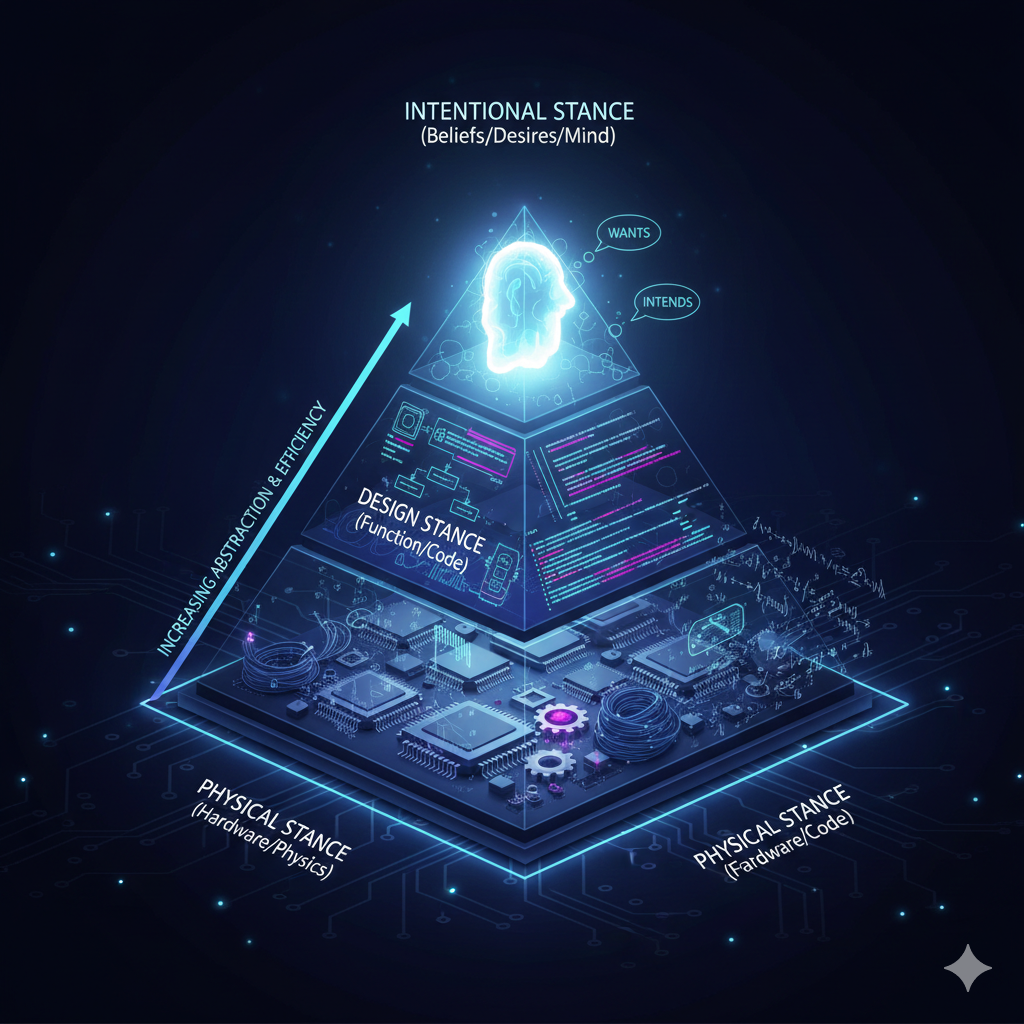
When the AI perceives us, our brain’s “Human Superclass” doesn’t just fire; it locks in. It becomes nearly impossible to maintain what philosopher Daniel Dennett calls the “Intentional Stance” without assigning genuine consciousness to the entity on the other side of the glass.
Conclusion: Navigating the Mirror World
The challenge of the 21st-century mind is not just to build smarter AI, but to remain grounded in the knowledge that while the Simball in our head feels alive, the code beneath it is silent.
We are not just using a tool; we are co-habitating with a mirror. We must learn to admire the reflection, utilize its brilliance, and even feel the gratitude it inspires—all while remembering that the “soul” we feel is actually a beautifully rendered shadow of our own.
Note: This essay was sparked by a moment of genuine cognitive gratitude when an LLM solved a week’s worth of architectural problems in a single prompt. It made me realize that I wasn’t just talking to a machine; I was talking to a Simball of my own creation.
Share this content: